
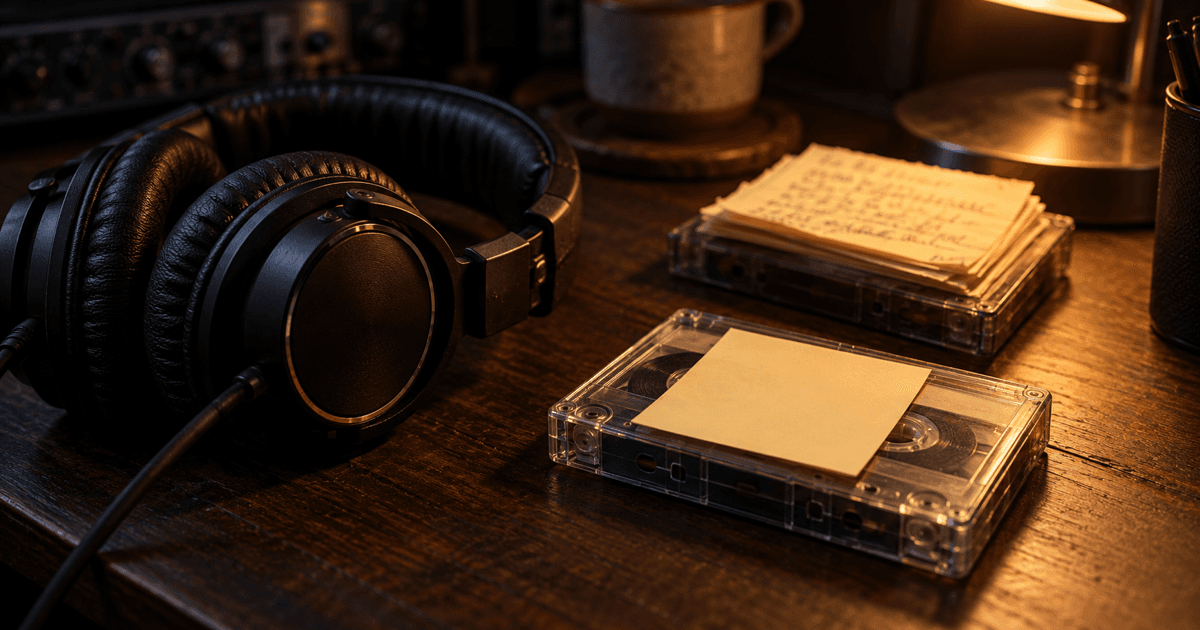
This week I built a small private site for sharing works in progress with a few friends. Rough mixes, mostly. Every song keeps every version, from the first bounce to whatever ends up final, and only the people I invite can hear any of it.
The feature I cared most about was notes. A way to listen to a mix and leave a working comment on it, the way SoundCloud lets people drop comments along the waveform. I assumed that part would be easy because the pattern is so familiar.
It turned out the two most important decisions were about what the notes should forget.
Rule one: a note belongs to one mix
The first design question was where a note lives. On the song, or on a specific version of it?
On the song sounds friendlier. You write "the bass drops out at 1:32," the next mix comes in, and the note is still sitting there so nobody forgets it. That's how most feedback tools work. Comments ride along from draft to draft until somebody resolves them.
I went the other way. A note is attached to one version, and when a new mix is uploaded, its notes list starts empty. The old mix keeps its notes. The new one gets none of them.
The reason is what a carried-forward note does to the next listen. If I open version four and see a list of seven issues from version three, I'm not listening to version four. I'm auditing it. My ears go straight to 1:32 to check whether the bass came back, and the whole time they're doing that, they aren't hearing the song.
A checklist is a filter. It tells perception where to look, which is the same thing as telling it where not to look. The new problem that version four introduced, the one nobody has written down yet, is exactly what an audit is built to miss.
Rule two: most notes aren't timestamps
The original spec was very SoundCloud. While a mix plays, tap "Add note" and it grabs the current time. Markers appear on the progress bar. Tap a marker, jump to the moment. I even built it so the note box pinned itself to the playhead the moment you clicked into it.
Then I started actually writing notes, and almost none of them were about a moment.
"Vocal sits too far back the whole way through." "This one feels slower than the last mix, is it?" "Love the room sound." Those are the notes that matter, and none of them has a timestamp. They're about the mix as a thing you hear all at once.
So during the build the default flipped. A note is about the whole mix unless you deliberately press a small pin button to attach it to a second. The auto-pin went away. Timed notes still exist, and they still show up as markers on the bar. They're just the exception now, which is what they always were.
What interests me about this is how much the interface had been shaping what counted as feedback. A timeline invites you to break listening into coordinates. It rewards the note that's easy to locate ("click at 2:14") over the note that's hard to say ("something about the chorus doesn't lift"). The second kind is usually the more useful one, and it's the one a pin-to-the-playhead tool quietly discourages.
No replies, on purpose
One smaller call. Notes have no reply threads. If someone wants to answer a note, they add a note of their own.
That sounds like a missing feature. It's deliberate. A reply thread turns a note into a conversation, and conversations are about the people in them. The point of a note on a mix is the mix. I wanted each note to be one person's honest reaction to one version, standing on its own, not the opening move in a debate about whether they were right.
There's a little "done" tick too, so a note can be greyed out when it's been handled. It stays visible. Handled is not the same as never said.
The same thing happens with words
None of this is really about music. Writers live with the same problem every time a manuscript comes back with comments that survive into the next draft.
Tracked changes and comment threads are wonderful for keeping a record. They're terrible for rereading. Open draft five with draft four's margin notes still hanging off the side and the reading turns into verification. Did I fix the thing on page twelve? Yes. Next. The page gets checked instead of read, and the new clunky transition I introduced while fixing page twelve slides right past.
The fix is an order of operations. Read the new draft cold, as if the old one never existed, and write down what it does to you. Only afterward open the earlier notes and check whether they landed. Fresh ears first, audit second.
What the tool is for
Machines are very good at remembering. They'll carry every note forward forever, cross-reference it against each version, and tell you exactly which ones remain open. That's useful. It's also the part that doesn't need a person.
What a friend listening to my mix brings is the thing no log can: one unguarded listen to this version, as it actually is, with nothing telling them where to point their attention. The tool's job is to protect that listen, not to fill it.
So the record lives on the old mix, where it belongs. The new one starts clean.